Selasa, 29 Desember 2015

Asus Zenbooks: UX303LN

Image result for Asus Zenbooks: UX303LN

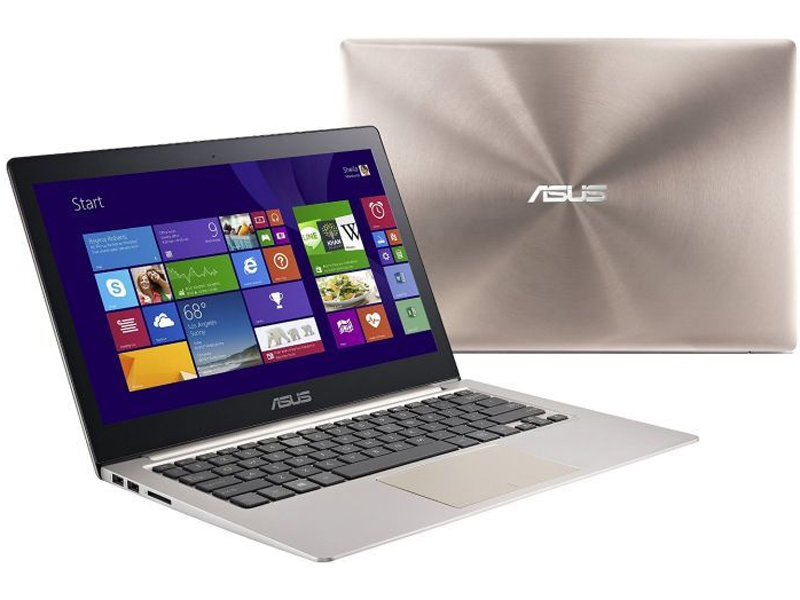
With the ASUS Zenbook UX303LN, you get an Ultrabook with oomph. It’s designed with the intention of providing better graphics than usual, thanks to the inclusion of a discrete NVIDIA GeForce 840M adapter, and it will at least give you an opportunity to run some games while still swinging a convenient thin-and-light form factor.

Build quality and design
The aluminium body and overall shape of the 13.3in UX303LN are reminiscent of the Apple Macbook Air, and people will continually go out of their way to point this out to you (sorry for doing just that). Just nod your head and rest easy in the fact that you’ve got a great overall laptop that’s comfortable to use (for the most part), and which will perform well for everyday tasks, including a bit of gaming.
An Intel Core i5-4210U, fourth-generation CPU is the leader in the engine room, and it’s supported by 8GB of RAM, a 128GB solid state drive (SSD), and the previously mentioned NVIDIA GeForce 840M graphics. For a machine that includes a discrete graphics adapter, it sure doesn’t feel like it. The Ultrabook disturbed our digital scales at 1.55kg and its balance felt good overall. You can open the lid with one hand and the base won’t lift up off the desk.
It has a thickness of 21mm at its thickest point when you include the rubber feet on the base, and the aluminium body provides plenty of rigidity. Indeed, the build quality is solid overall, though we did notice that the screen sometimes tilted a little when we picked up the laptop by the base to move it around. As such, we think the hinges could stand to be a little stiffer.
Image result for Asus Zenbooks: UX303LN
The screen is Full HD and supports touch, though we found that we rarely used the touch capability. It’s not like you can tilt the screen back all the way flat or switch into a tablet form factor; the most you can do is incorporate touch actions into your navigation of the Windows 8.1 environment. Because it’s a glossy screen, reflections from room lights will sometimes litter the screen, but it won’t give off a full mirror finish, thanks mainly to its decent level of brightness.
We found the overall quality of the screen to be easy on the eyes, and even using full brightness at night didn’t produce strain. For a 13.3in screen, we feel that the Full HD resolution is ideal. Some laptops, including Lenovo's Yoga 3 Pro have an 1800p resolution that can be tough for some eyes to use without scaling, and scaling in Windows 8.1 doesn't work as well as it should, with many system windows, dialogue boxes, and tooltips either looking muddy or staying at the native size of the screen.
Performance
As for its performance, the Zenbook’s Core i5 CPU, plentiful RAM, and SSD all combine to produce a laptop that won’t feel sluggish when undertaking everyday office and Web-based tasks, and it’s fine for image editing, video streaming, and also a bit of gaming. Blender 3D rendering recorded a time of 48sec, which is a solid result, while in CrystalDiskMark the SSD recorded a sequential read rate of 513 megabytes per second (MBps), and a write rate of 289MBps.
The laptop will auto-detect the appropriate graphics adapter to use for the application (either the integrated Intel HD, or the NVIDIA GeForce), although you can also select the adapter you want for particular applications. The Intel graphics are the default operator, so the laptop won’t draw too much power while running basic tasks on battery.
In our rundown test, in which we disable power management, enable Wi-Fi, maximise screen brightness, and loop a Full HD, MP4 video file, the laptop lasted 6hr 3min, which is a respectable time for a 13.3in Ultrabook in this test.
Image result for Asus Zenbooks: UX303LN gaming
We did a little bit of gaming on this laptop just to give you an idea of what to expect. Battlefield 3 ran at only 11 frames per second at the native resolution of the screen using the NVIDIA adapter, and even dropping the resolution to 1366x768 only upped the frame rate to 22fps. You won’t want to use this laptop for this type of game unless you don’t mind getting killed all the time (though the way we play, the laptop has nothing to do with that).
When we ran Need For Speed: The Run, the results were more pleasing, with 27fps achievable at Full HD using the NVIDIA adapter. This game was enjoyable on the laptop, and for lazy scenarios, such as when you just want to lie down and race while resting the laptop on your chest, it’s perfectly fine. Using the Intel adapter, only 11fps were achieved, so the NVIDIA adapter definitely provided a good use case for running this type of game.
In 3DMark’s Fire Strike test, the NVIDIA adapter propelled the system to a mark of 1305, while the Intel graphics got 596. In Sky Diver, the NVIDIA adapter got 4965, while the Intel adapter got 2617. You can see that in these tough tests the discrete graphics do make a difference.

Jumat, 25 Desember 2015

Asus Zenbooks: UX303UB

Image result for Asus Zenbook: UUX303UB

The latest model from Asus' Zenbook UX 303 series is once again a thin and nice 13.3-inch notebook. It has a lot of performance, but is still quiet in operation. The battery runtimes are unfortunately shorter compared to previous Zenbook models.

The Zenbook UX303 from Asus is a thin 13.3-inch subnotebook. We already reviewed the Zenbook UX303 a couple of times – versions with and without dedicated GPUs. The several models usually offer a lot of CPU performance in combination with low emissions and long battery runtimes. The latest iteration with the designation UX303UB is equipped with a Skylake processor and a GeForce 940M graphics card. Our review will show if the device can keep up with its predecessors.
Rivals for the Zenbook are notebooks like the Dell XPS 13 2016, the Apple MacBook Air 13 or the HP Spectre 13. The Surface Book from Microsoft might also be an interesting alternative.
Our review configuration of the Zenbook uses the chassis from the Zenbook UX303LN-R4141H, so we will not evaluate the case, connectivity, input devices, display and the speakers in this article. The corresponding information is available in the review of the Zenbook UX303LN-R4141H

Display

Asus equips the Zenbook with the same matte Full HD IPS display that we already know from the Zenbook UX303LN-R4141H. It manages a very good luminance, good contrast and wide viewing angles. The sRGB color space is covered by 92 percent and the color presentation is already good with the factory settings.
The brightness of the display is regulated via pulse-width modulation up to 90 percent of the maximum luminance. The low frequency of just 178 Hz can already be tiring for sensitive users. There is no PWM flickering at brightness settings higher than 90 percent.

Performance

The Zenbook UX303UB is a very powerful 13.3-inch subnotebook. It provides plenty of performance for common tasks and can even handle games, but still manage decent battery runtimes at the same time. Our review unit currently retails for around 1,300 Euros (~$1416), while the least expensive model from the series – UX303UB-R4044T (Core i5-6200U, 128 GB SSD) – is available for around 1,000 Euros (~$1089).


Processor

Inside the Zenbook is a Core i7-6500U (Skylake) dual-core processor. It is a frugal ULV model with a TDP of 15 watts. The nominal clock is 2.5 GHz, but can be raised up to 3 GHz (two cores) and 3.1 GHz (one core) via Turbo Boost. However, the CPU can only utilize its Turbo potential in single thread applications, while multithread applications are executed with 2.5-2.6 GHz. The processor can therefore not utilize its full potential in multithread scenarios. This behavior is similar on mains as well as battery power.
Because of those multithread limitations, it is not faster than its direct predecessor, the Core i7-5500U (Broadwell), and the results are pretty much on par. Other reviews showed that the advantage of the Skylake processor would be around 12 percent with the full Turbo utilization. In this case, the 6500U only manages a small lead in the single thread applications.

System Performance

Thanks to the fast SSD and the powerful processor, the system runs very smoothly and we did not experience any problems. The results in the synthetic PCMark benchmarks are also good. The Zenbook is a bit better than the direct predecessor (Asus Zenbook UX303LN-R4274H) due to the slightly faster GPU and CPU. We already mentioned that the Skylake processor can only beat its predecessor in respect to the single thread performance. The latter is more important in practice, which is also the reason for the higher PCMark 8 score of the Skylake Zenbook. It is not possible to improve the system performance of the Zenbook any further.

Storage Devices & Card Reader

The Zenbook is equipped with a 2.5-inch Solid State Drive from Micron with a total capacity of 512 GB. There are two partitions ex-works, one for the operating system (190 GB) and one for other files (286 GB). The remaining storage is occupied by the recovery partition. The SSD manages good transfer rates. Previous models of the Zenbook also had an mSATA or M.2 port besides the 2.5-inch bay, which is not the case for our review unit anymore.
The card reader of the Zenbook reaches a maximum transfer rate of 85.6 MB/s during the copying of large files. 250 JPG pictures (around 5 MB each) result in a transfer rate of 64 MB/s, which means the card reader is one of the fastest models. We used our reference SD card (Toshiba Exceria Pro SDXC 64 GB UHS-II) for the test.

GPU Performance

The graphics card GeForce 940M is the successor of the GeForce 840M GPU from previous Zenbook models. Both chips are mainstream GPUs and support DirectX 11 and they are similar. Both are based on the Maxwell architecture and the 940M just has a slightly higher maximum clock (1124 vs. 1176 MHz). The advantage of the Zenbook over its predecessor should, therefore, be very small in the 3DMark benchmarks. 
However, this is actually not the case. The predecessor is usually slightly ahead of the Skylake Zenbook, which has two reasons: The Skylake processor cannot utilize its full performance in multithread scenarios, and the video memory has a lower clock (900 vs. 1,000 MHz) compared to the chip in the predecessor.
The GeForce GPU supports switchable graphics (Optimus) in combination with the integrated HD Graphics 520. The latter handles the graphics output for simple tasks and on battery power. The user usually does not have to interfere, because the switching between the different GPUs happens automatically. You can obviously make manual adjustments if you want.

Gaming Performance

The CPU-GPU combination of the Zenbook can also handle many games smoothly in the HD resolution (1366x768 pixels) and medium settings. Some titles can even be played with higher quality settings. The full resolution of the screen (Full HD) on the other hand is only possible with a couple of games, while more complex games usually do not run smoothly at all. One example for that is Batman: Arkham Knight. The gaming benchmarks support the results of the 3DMarks: The Zenbook cannot beat the predecessor. We already explained the reasons earlier. You will have to get a 14- or 15.6-inch notebook if you want higher gaming performance, because the Zenbook is already equipped with one of the fastest GPUs among 13.3-inch systems.

System Noise

The Zenbook is usually completely silent while idling because the fans are often deactivated, but they are not very loud under load, either. We can measure a decent noise of 38.2 dB(A) during our stress test and around 35.9 dB(A) in a gaming session. The Zenbook, unfortunately, produces a constant electronic noise. It is not very audible in a normal environment and you will have to get your ear very close to the fan exhaust to hear it. It is, however, noticeable at a normal viewing distance in quiet environments. It can also get louder, which is always the case when the SSD copies a large amount of files.

Temperature

The Zenbook executes our stress test (Prime95 and FurMark for at least one hour) the same way on mains as well as battery power. The GPU can maintain its full performance (1176 MHz), while the clock of the processor fluctuates between 400 MHz and 2.5 GHz (battery) and 2.7-2.9 GHz (mains). We were able to measure temperatures of around 50 °C (122 °F) at some spots during the stress test, which means the Zenbook warms up more than its predecessor.

Power Consumption

The Zenbook does not consume a whole lot of power while idling at up to 8 watts. We can measure up to 55 watts during the stress test, which is reasonable when you consider the components. The CPU clock fluctuates heavily during the stress test, so the consumption is not steady at 55 watts. The consumption is at around 47 watts (+/- 5 watts) in a gaming session. All in all, the values of the Zenbook are a bit higher compared to the predecessor. The power adaptor has a nominal output of 65 watts.

Battery Runtime

The battery runtimes of the latest Zenbook are once again good. The notebook lasts 6:50 hours in our practical Wi-Fi test. We use this test to simulate web browsing while the luminance is adjusted to 150 cd/m² with the "Balanced" power profile. Our video test runs for 6:53 hours. We run a loop of the short movie Big Buck Bunny (H.264, 1920x1080 pixels) while the wireless modules are turned off and the display brightness is once again adjusted to around 150 cd/m².
A look at our comparison table shows that runtime in the Wi-Fi test decreased from the Haswell Zenbook over the Broadwell Zenbook to the Skylake Zenbook – even though the battery capacity is identical. Here we can see that the hardware gets more powerful every iteration and consumes more power during our runtime tests. The maximum runtime, on the other hand, was increased.
One final note: The battery of our review configuration already shows signs of wear at around 7 percent, which means 7 percent of the original capacity cannot be used anymore. The Zenbook should, therefore, manage slightly longer results with a healthy battery. Both the Wi-Fi and the video test results should surpass the seven-hour mark in this case.

The notebook is pretty fast and can handle games, but the system is usually still quiet. The handling benefits from the fast SSD and there is no lack of storage thanks to the 512 GB drive. A replacement of the SSD is no problem, either, since it is rather easy to remove the bottom cover of the notebook. The Skylake Zenbook once again uses a very good display. The matte Full HD IPS screen manages a good luminance, a high contrast, wide viewing angles and decent colors. The battery runtimes are good as well.
The new model unfortunately also deserves some criticism: The processor cannot utilize its full performance, which is probably a result of the insufficient cooling solution. The GPU memory is also a bit slower compared to the predecessor, which is why we cannot see performance gains (CPU, GPU, gaming) over the predecessor (Broadwell/GeForce 840M). The latter is therefore still an inexpensive alternative to the Skylake Zenbook, but corresponding models are hard to get. The electronic noise should not be an issue in this price range, either.

Kamis, 10 Desember 2015

Asus Zenbooks: UX303LB

Image result for Asus Zenbook: UX303LB

Asus Zenbook UX303LB Review 2015 - The 13-inch portable PC is an old colleague. We tried the GeForce 840M model just a couple of months back. Presently we are investigating the new 940M form. Has the racer transformed into a rocket? 

We gave the Zenbook UX303LN-R4274H a rating of 86% in May 2015, which just the best gadgets accomplish. There weren't any critical deficiencies: notwithstanding a matte, brilliant IPS screen, great data gadgets, low discharges, and wonderful runtimes went as an inseparable unit. Melded with a quick SSD, a strong 15-watt SoC, and a GeForce 840M, the 13-inch portable workstation included everything in a classily constructed aluminum packaging that numerous purchasers need. 

Presently the 840M makes space for the 940M. That is reason enough for a fast look at the arrangement. Is the Zenbook UX303LB still a buy tip, or ought to the purchaser adhere to the now as far as anyone knows less expensive 840M antecedent, accessible with a Haswell SoC and 256 GB SSD at a cost beginning at 1000 Euros (~$1095)? The UX303LB-R4079H audit test with a Broadwell i5-5200U and 940M, however generally indistinguishable setup, costs precisely 100 Euros (~$109) more. 

Display

The screen is indistinguishable with that of the Asus Zenbook UX303LN-R4274H sister model. It would be ideal if you see the test for subtle elements. 

Performance

Is the GeForce 940M worth its higher cost? We tend to say no. The same GM108 Maxwell chip as in the more established GeForce 840M is behind the name. Nothing has changed about the specialized specs - 384 Shader units, 24 TMUs, 64-bit memory interface. Just the base and support velocities have been expanded imperceptibly. 

We investigated the 940M's representation execution in Lenovo's ThinkPad T450s (i5-5200U). Its energy is 50 to 60% higher than the incorporated HD Graphics 5500, as Dell's XPS 13 demonstrates. The devoted 940M additionally prompts a 50 to right around 70% favorable position in genuine diversions. In any case, the 840M is on par as the correlation in 3DMark 11 appears. It falls behind by at most 4% here. The Physics execution of our audit test is lower than in the sister models because of the Core i7 in both UX examination gadgets. 

A review of diversions that can be played with the GeForce 940M can be found on the GPU's page. Representation heavyweights like The Witcher 3 and Batman: Arkham Knight ought to be crossed out on the list of things to get. Soil Rally, GTA V, Battlefield Hardline 2015, Evolve, The Crew, Far Cry 4 or Dragon Age: Inquisition have a place with the numerous raving successes that can even now be played in the HD determination utilizing medium subtle elements. 

As to the processor, we can just furnish an examination with the Core i7 adaptations (5500U, 4510U) here. They procure in a little in addition to of 10 to 14% inferable from the higher clock rates. It can at times even be 17% in the multi-test of Cinebench. That equivalents an execution in addition to of just 5% over the same processor sort (previous i5-4200U or i5-4210U) in the Haswell/Broadwell examination. Then again, contracting the manufacture process from 22 to 14 nm has not brought about higher force utilization. Acer's Aspire V3-572PG and Aspire R14 R3-471TG linger behind by 7 to 18% in the Cinebench tests, which is to epitomize the Haswell i5 variant of the UX303L that is still available. The gadgets' changing Turbo Boost usage averts making an accurate 1:1 examination crosswise over distinctive gadgets. 

The purchaser gets an a la mode, conservative subnotebook with a long battery life, quick SSD, and a review edge and rich shading IPS screen in the Zenbook UX303LB-R4079H (Broadwell i5, 940M) for in a matter of seconds 1100 Euros (~$1204). On top of that, a GeForce 940M that can render current amusements in at any rate the HD determination (1366x768 pixels) easily is incorporated.

Image result for Asus Zenbook: UX303LB

Notwithstanding the audit test, there are designs with a Haswell SoC and/or GeForce 840M available. Their costs can vary extraordinarily. On the off chance that the value distinction does not appear to be excessively incomprehensible, the purchaser can certainly take the current Broadwell model with the 940M. Be that as it may, any individual who needs to spare 100 Euros (~$109) and more will do nothing amiss with the "obsolete" Haswell/840M variant. The execution contrasts in gaming and processor execution are quantifiable however inconsequential for viable use

Minggu, 15 November 2015

Gigabyte Aorus X3 Plus

Image result for Gigabyte Aorus X3 Plus

On my never ending quest to find the “perfect” high-end ultrabook, I was able to get my hands on the new Aorus X3 Plus. I’ve never used an Aorus product before and I’ve read a few not-so-stellar reviews on Gigabyte laptops as well, so I had some low expectations before getting it.
After spending three days with it now, I’ve been pretty impressed although there are a couple issues I’ve run into that are potential deal breakers for people.
So I was excited to finally try out the Aorus X3+ once it became available. Here’s my findings and how I think it stacks up to the competition.
Design
When I took it out of the box, my first thought was: Wow, this is light! At just under 4 lbs(1.8kg), the X3+ is arguably the lightest ultrabook of its class. The lid, palm-rest and underbelly are all aluminum, but there is a fair amount of plastic still used mostly out of necessity. The vent housing in the back and the LCD bezel are both made out of a hard plastic.
I’m also pretty certain that the keyboard bracket is made out of plastic, if not, a VERY thin sheet of aluminum. Most of the plastic is understandable considering the difficulty and cost involved to make those components out of metal. As is, the keyboard bracket is a mild disappointment though, which I’ll cover more later.
Image result for Gigabyte Aorus X3 Plus
Aesthetically, the machine is pretty unique. It’s flashy enough to make it stand out but it’s not over the top with bright LEDs, unnecessary chassis shape or odd glowing badges on the lid, like some competitor laptops of this class have. The logo is really the only eye catcher I would change but it’s really not that bad. It looks like GDI meets Trogdor, with a beefy arm coming out the neck of an eagle head(look them both up if you don’t know what I mean). It’s FAR more subtle than the Razer Blade and the “gaming G series” badge on the Ghost Pro, so I appreciate that at least.
Overall, the build quality feels pretty good, but I have to ding them on a couple things. When pressing down on the lid, there is a little flex. I also noticed it on the underside a little as well. This is likely due to using aluminum that is too thin and is probably how they managed to get the laptop to be so light.
Also, my unit has a minor defect in the bezel, where there is a 1 mm gap where the plastic clip meets the aluminum lid. These are the kind of things that happen when you mix plastic and metal on such a thin laptop. I noticed similar attributes with the Ghost Pro, but the Razer Blade felt incredibly solid in comparison and was similar to a Macbook Pro.
The underside is quite a nice sight to look at. There are multiple vents and footpads to make the laptop cool well and yet still look stylish. Not that I look under my laptop all that much, but when I carry it around, it’s less of an eyesore than the magnitude of stickers, screws and ports seen on other laptops. To open the bottom panel, you just need to remove the 10 screws with a T6 driver.
Keyboard and trackpad
Two of my biggest pet peeves are the keyboard and trackpad. I’m critical because I use them daily. On a gaming laptop, most people don’t care about trackpads, but these new ultraportable gaming laptops are more for those who want to have a machine for both productivity and fun. So having a good trackpad and keyboard are important to me, and seem to be the thing that gets screwed up the most.
MSI’s Ghost Pro had a great keyboard but had a mediocre trackpad. The Razer Blade had both a nice keyboard and trackpad, but chose to have physical mouse buttons over the more popular clickpad style.
My feelings on the X3+ trackpad are mixed. At first glance, I thought it was one of the nicest trackpads I’ve ever seen. It’s solid black glass and it certainly feels like it. In fact, it feels exactly like the glass on my smartphone. It’s definitely a strange thing to use at first but I could certainly get used to it. There is a small line on the trackpad to distinguish between left and right click(which are integrated into the trackpad by pressing down on the corners). It’s very responsive but not entirely accurate. In fact, I think it’s so smooth that you sometimes miss just how far you want the pointer to go.
When using a trackpad, I expect the mouse pointer to move across the screen consistently with my finger strokes. With this trackpad, I noticed that sometimes the pointer would not go as far with the same motion as before. For example, moving from left to right across the trackpad would move the mouse pointer a certain distance, but if I moved my finger back to the original spot my mouse pointer might only make it halfway.
Additionally, this is an Elan trackpad so the drivers are quite limited in comparison to Synaptics. I turned the pointer speed all the way up but was not able to move the mouse pointer more than 75% across the screen in one stroke. This is partially due to the high resolution of the screen but can only be fixed with drivers. Hopefully Elan and/or Microsoft will update those drivers soon.
Another thing to note on the trackpad is because it’s glass, it can be hard to use if you have sweaty hands. The glass is only slightly oleophobic, similar to your average smartphone but not like the Nexus 4(which is probably the slickest glass I’ve ever seen). So fingertips with a little moisture will get stopped up on the glass from time to time. I noticed this more when the laptop got hot, making my palms hot. It’s something to think about if you plan on using it outside and you live in a warm weather town.
The keyboard on the X3+ is above average to me. I had no trouble at all typing on it right from the start. The keys have good travel for such a thin laptop and are very responsive. The keys are well placed, the shift keys are full sized and the windows key is on the left side. It’s pretty much your average 13-14” laptop keyboard layout with the addition of the macro keys on the left side.
The backlighting is white and looks absolutely perfect to me. There are only three settings: off, medium and bright. They used a matte film over the lighting so there is no annoying bleed coming from the keys at certain angles.
The macro keys on the left hand side are a pretty cool highlight to the machine. The top “G” key can be long pressed to turn on/off the ability to use the other keys. Once on, it can then be pressed to change color from green, red, blue, orange and purple. Each of these colors represents a set of macros for the numbered G keys underneath. So 25 macros in all.
You can program those keys to do whatever macros you desire. While meant for gaming, you can also use these keys for productivity. I made one set have cut, copy, paste, previous window and close window(a dangerous one). I also had another set to have print screen, Alt-X, Alt-Z(undo and redo for some programs), home and end. It’s a pretty clever way to return some functionality to a portable laptop layout that would otherwise only be found in 15.6” laptops. One thing I will say is you WILL hit the G key a lot, thinking you are hitting escape. It’s harmless but might be bad if you really needed to hit escape in time.
I’ll also compliment them with making some useful function key assignments – it’s nice to see keys that turn on/off things like Wifi, Bluetooth, webcam, trackpad, etc. The Fn key that confuses me is the eject button on the Esc key. At first I thought it would work with SD cards, but it doesn’t. It also doesn’t work with external DVD drives, so I’m not sure what its purpose is.
With all that good stuff, I feel obligated to point out the only major flaw I found with the keyboard: the flex. If I had to rank this with other laptops I’ve seen, I’d say it’s below average. Normally I see the most flex in the middle of the keyboard, but on this one, I see it all over. A lot of it has to do with the (assumed) plastic bracket used to hold the keyboard in. It’s not the same piece as the palmrest, so it’s natural that it isn’t a perfect fit.
I’ve seen some reviews say it’s not so bad, and I agree – it’s totally subjective to the user. I think I even saw a video saying there was minimal flex but by seeing it, it looked terrible to me. Comparing it to the competition, the Razer Blade had no flex, GS60 had a tiny amount in the center(almost none) and the Y50 had minimal flex. I could certainly live with it – it’s not like it’s impeding my typing, but it’s not nice to look at and is certainly not what I’d expect from such an expensive laptop.
On a brighter note, that plastic bracket might come off, which could allow for you to remove and modify the keyboard. It would be cool to be able to easily change the backlight color like on some of the Asus RoG laptops.
Screen
The X3+ contains the exact same model screen as the new Razer Blade. The only difference is this is a matte non-touch model as opposed to a glossy touchscreen. It’s a Sharp IGZO 3200×1800 resolution screen that measures 13.9”(or 14” by Razer’s standards). Dead on, the image is absolutely stunning, calibrated with accurate and beautiful colors right out of the box.
The viewing angles are pretty good but are not up to par with FHD IPS screen’s I’ve seen in the past. There is an obvious color shift when you take a slight angle from dead center, which makes some of the colors a little more whiteish. One example is the red x for windows turns to a light beige when at 45 degrees. Colors and text are still visible until around 130-140 degrees where they fade out more. It’s not as bad as TN screens where it fades to nothing or the colors change color completely, but it’s not as good as some IPS screens where you can literally read a document at 170 degrees.
The problem lies in the brightness and it’s a double edged sword. If you lower the brightness settings in Intel’s control panel, the viewing angles are perfect, but many of your images will seem darker than they should. I found the sweet spot to be -20 if viewing angles matter but kept them at default of 0 for the 95% of the time when they didn’t matter.
Unfortunately there is a hard stop that prevents you from opening the lid more than about 140 degrees. This isn’t going to bother most people, but those that stand over their laptops all the time might find it limiting. Another fault I found with the screen was it was a little wobbly. Since it’s not a touchscreen, it’s not the end of the world, but they could have done a little better.
I think they left the hinge a little weak in order to open the lid one handed, but there are other competitors that are able to do that without having a wobbly screen. Speaking of opening it one handed, it barely does so. About 50% of the time, the front of the laptop picks up completely before opening up.
My last gripe about the screen is the lid is very weak, causing potential future damage to your LCD. I noticed that when I would adjust the lid quickly, the screen would flicker. Upon further investigation, light tapping on the back lid causes the backlight to strike the lcd, resulting in white flashes on the screen. This is not what I would expect out of a $2000+ laptop.
The brightness level is also very good with a measurement of 290 cd/m2. The advertised brightness was 400 cd/m2, however I was unable to get those numbers. Once unplugged, the max brightness drops slightly to 230cd/m2, still very bright enough to use in a well lit office or outdoors. The contrast ratio measured a mere 430:1 at the brightest setting and dropped slightly to 390:1 at lower brightness levels. The color gamut of the display resulted in sRGB: 98%, NTSC 69% and aRGB 74%.
As with other UHD+/4K screens, you’re going to have to deal with the scaling issues present in these systems. Most windows apps run perfectly fine and look great. In fact, when using the desktop, you will grow to love how it looks and start to cringe at the sight of a FHD display. But there are problems with UHD displays that, for now, I find just plain annoying.
For example, some games are not playable at full resolution and require you to scale them to a lower resolution, such as 1600×1900. Usually that isn’t an issue, but for some games it will play in a letterboxed version on the upper right corner or the center of the screen. Crysis 3, for example, does this randomly: sometimes it will open full screen and other times it will run in the letterbox. The only sure fix is to manually change the desktop resolution to the desired level before playing the game.
Depending how low you go, the scaling will make some tasks impossible until you revert it back to normal. I assume Windows, Direct X or whoever is responsible will fix this, but it’s been an issue for over a year now with no proper solution. Other applications will refuse to scale properly, such as Blizzard launcher and Origin launcher. So they will be 4x smaller than you see on a FHD display, and it’s something you just have to get used to until they fix it.
Hardware and performance
Unlike most laptops, the Aorus X3+ comes pretty much maxed out. It comes with 16GB of RAM and both M.2 bays are filled with 256GB SSDs each, configured in RAID 0. There may be lower speced models in the future, but there are no reliable sources as to what those models are and/or when they will be available.
According to Gigabyte, there will be a X3 model that will have a 13.3” 2560×1440 screen instead of the one this machine has. It will be roughly the same pixel density and the bezel will be larger, but I think that might be a better option for those who want to play games at full resolution.
Update: Gigabyte has just released a QHD(2560×1440) version of the laptop.  See my links below on where to get one.
For connectivity, a Killer LAN port is located in the back of the machine, next to the power adapter. There is also an Intel Wireless AC 7260 card onboard. While this is generally a good wireless card, I have been having some trouble with it connecting to some wireless networks. There have been a couple other reports on the forums as well. It’s most likely a driver issue, but there could potentially be a hardware issue at stake. On my home network, I was able to download at 35Mbps and upload at 11Mbps from 2 rooms away(approx. 30ft) from my router. Closer ranges, I maxed out my connection.
The CrystalDisk benchmarks were very good, with sequential read speeds around 950MB/s and sequential write speeds of 739MB/s. 512K speeds were also in the 600s which is great. You would think the boot time would be faster, but I was getting boot times of about 15 seconds. That’s still nothing to complain about.
Other benchmarks were as follows:
  • 3DMark: FS – 4201, SD – 13450, CG – 15041, IS – 91304
  • 3DMark temps: Max CPU 97°C, max GPU 85°C
  • PCMark 8 – 3216 with max CPU 88°C and Max GPU 65°C
I was able to grab some benchmarks while playing a couple games as well.
  • Skyrim – played the first dragon fight from beginning to end
    • all settings maxed out, 1920×1080 resolution – 60fps with drops in the low 50s. CPU 98°C, GPU 87°C
    • max settings but no AA or AF, 3200×1800 resolution – 50fps with drops to the mid 30s. CPU 99°C, GPU 93°C
    • all settings maxed out, 1600×900 resolution – 60fps capped. CPU 95°C, GPU 84°C
  • Crysis – Played through the opening scene for 10 minutes
    • Medium settings, no AA 1x AF, 3200×1800 resolution – 25-35fps, CPU 99°C, GPU 93°C
    • Medium settings, no AA 1x AF, 1920×1080 resolution – 50-60fps, CPU 88-93°C, GPU 79°C
    • Very High settings, no AA 1x AF, 1920×1080 resolution – 25-40fps, CPU 98°C, GPU 88°C
*Note: All temps taken in a room @ 24C. Measurements were taken with HWMonitor and GPU-Z
I experienced some frequency throttling when playing Crysis 3 at native resolution, however it was very minor and only dropped the framerate by 5-8fps. This can be prevented by lowering the graphics details a little, to keep the GPU under 90C. I wasn’t using a cooling pad, so that might help as well.
9/14/14 update: I was able to retest all the gaming benchmarks on a cooling pad.  Across the board, CPU temps improved by 5-8°C and GPU temps improved by a maximum of 4°C
Yes, this laptop gets hot but it’s only because I was pushing it hard. Lowering the graphics details and/or resolution will certainly decrease the temperatures.  I would be very cautious of letting my CPU temperatures stay this high long term.
2/3/15 Update: Gigabyte has released v3 of the X3+, which includes a 970M GPU.  This will add a noticeable performance bump as well as cut down on the heat issues I experienced.  See below on where to get one.
Noise, Heat and others
During normal use, the laptop is extremely quiet. Once in a while the fans will kick on low speeds, but they are barely audible. When playing games, the fan speeds certainly pick up though. As you can see from the game results, the laptop gets very hot! To dissipate that amount of heat, the fans kick on full speed. I’ll give them credit, I did not experience a whole lot of throttling, but I also didn’t play any long sessions either. As close to the thermal limits as I got, I would try to avoid pushing the machine to the limits on a regular basis.
As far as the cooling system goes, there are two large fans – one for the CPU and the other for the GPU. The intakes are on the rear portion of the bottom of the laptop. The exhausts are those two large ports out the rear of the laptop. The exhausts are plenty big enough and point in an ideal direction to prevent discomfort.
Fan noise at low speeds were measured to be 35db from the users head. At full speeds, the fans are about 55db. Take this with a grain of salt as this is measured from a smartphone app and is not incredibly accurate. I did measure similar results on both the Razer Blade and the GS60 Pro though, the Razer Blade being the quietest of the three.
As far as external heat goes, the underside gets extremely hot to touch. It’s not something you put on your lap, although I did so during the game testing as a worst case scenario. If you insist on playing on your lap, don’t wear shorts and expect sweaty thighs. The keyboard on the other hand stays at tolerable temperatures. At no point did my palms or fingers feel uncomfortable. They did get a little warm though, which led to sweaty fingertips. Like I mentioned before: sweaty fingertips = sticky trackpad.
Speakers
On the front edge, both on the right and left, there are two grills that could be mistaken for vents. These are actually for the speakers.
Don’t be fooled though, as the speakers actually face downward and there are sound ports on the bottom as well. They are not particularly loud either and I wonder if there is something I’m missing. Sometimes they sound fine but when I played Skyrim, it was awfully quiet. It was so quiet, I could barely make out any voices over the fan noise. I’ll keep looking into it, but my first impression is the speakers are terrible.
Battery life
My battery test consists of using the stock “Balanced” power profile, maximum brightness, wifi connected, Bluetooth off, keyboard backlit and running a 720p movie in a continuous loop at full screen with the volume muted. I start the clock when it’s unplugged and stop it when the unit performs a self- shutdown. The Aorus X3+ lasted exactly 3 hours and 30 minutes. This can be compared to the GS60 Pro, which got 2 hours and 57 minutes and the Razer Blade which got 4 hours and 7 minutes.
I repeated the test in the stock “Power Saving” power profile. Brightness was set to 30% (about 80 nits) and all the other settings were the same as the previous test. The X3+ lasted 4 hours and 36 minutes. This beat my previous test of the Ghost Pro at 3 hours and 14 minutes, but just fell shy of the Razer Blade’s 4 hours and 57 minutes.
All in all, the battery life is pretty decent for a gaming laptop, but not that great for an Ultraportable. Considering the processor is a quad-core and not the low voltage U processors, this battery life is expected.
Power Brick
The power brick is quite large compared to the competition. I’ve read complaints about how they should be able to make theirs as small as the Razer Blade, but it should be noted this brick is 180W as opposed to the 150W bricks of the Razer and MSI GS60.
Even though it’s bigger, I think this is a good thing. When testing the Ghost Pro and Razer Blade, I constantly monitored throttling due to lack of power when the settings were maxed out. I never had this issue with the Aorus X3+. The brick is significantly thicker than the brick of the MSI Ghost Pro, but is not as wide or long. I’d say they say they did about as good as they could given the wattage they chose.

Sabtu, 03 Oktober 2015

Lenovo ThinkPad Yoga 460

Image result for Lenovo ThinkPad Yoga 460
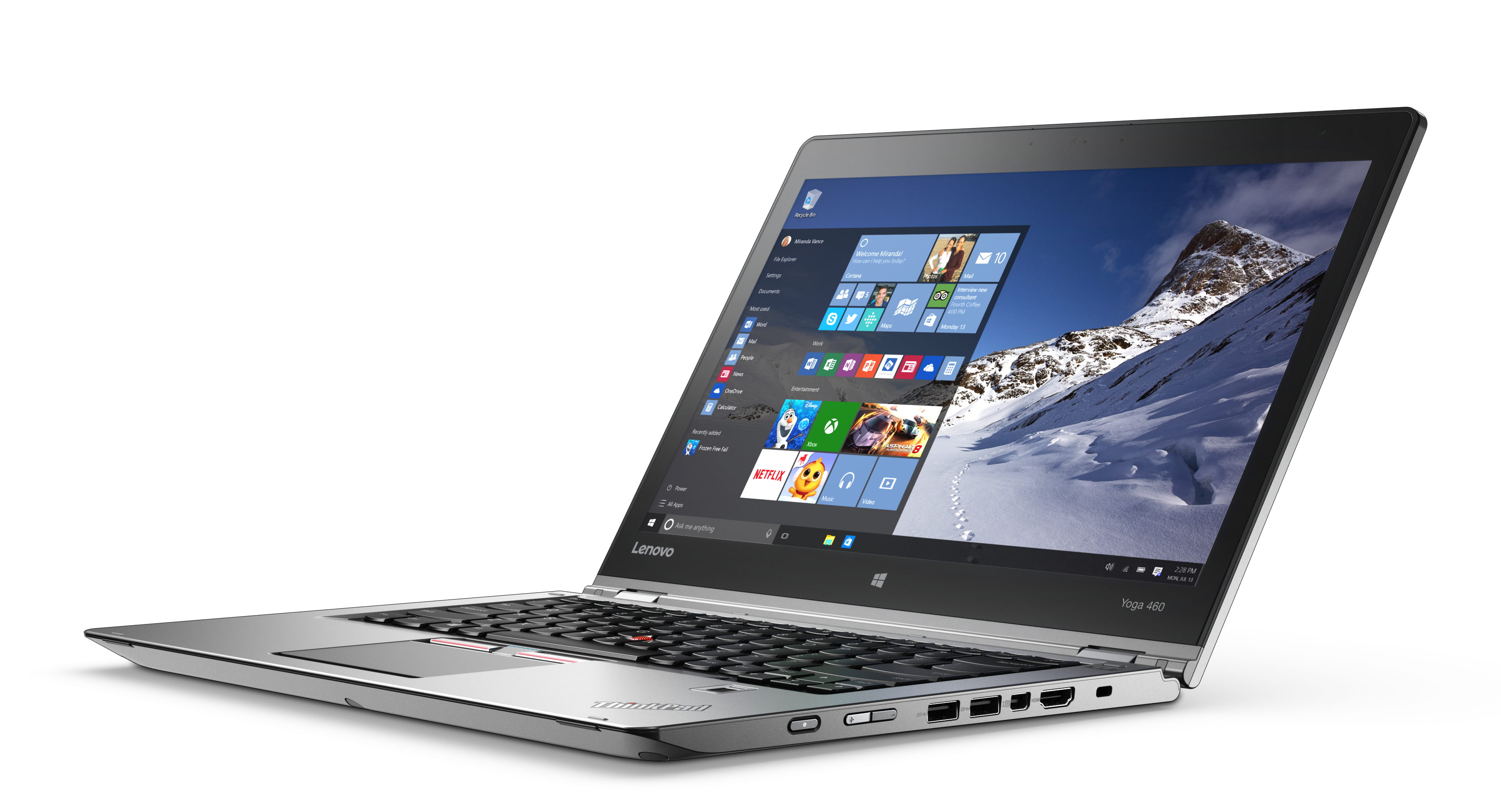
Lenovo recently launched the new ThinkPad Yoga 460. The 14-inch convertible is primarily aimed at business customers. Find out in our extensive test what Lenovo has to offer, and whether it can fulfill the high demands of the business world.

Lenovo now has a 14-inch device in its lineup that is once again situated in the professional field with the ThinkPad Yoga 460. The convertible is comparatively expensive, and it is therefore not really aimed at students. Lenovo primarily wants to convince customers from the business sector with security features, such as a fingerprint scanner. Thus, Lenovo follows a different concept than with the predecessor that barely provided any security features.
Lenovo offers the ThinkPad Yoga 460 in two base configurations that can be configured freely in the further course. The cheapest device with an Intel Core i5-6200U, 4 GB of DDR3 RAM and a hybrid hard drive made up of 500 GB + 8 GB of cache costs around 1139 Euros (~$1294). Our review sample sports an Intel Core i5-6200U and 8 GB DDR3 RAM. The system storage is a 256 GB SSD. This configuration boosts the price of our review sample to approximately 1300 Euros (~$1477). Lenovo demanded these prices at test time in its online shop. The Intel Core i7-6600U is the strongest CPU available for Lenovo's ThinkPad Yoga 460.

Case

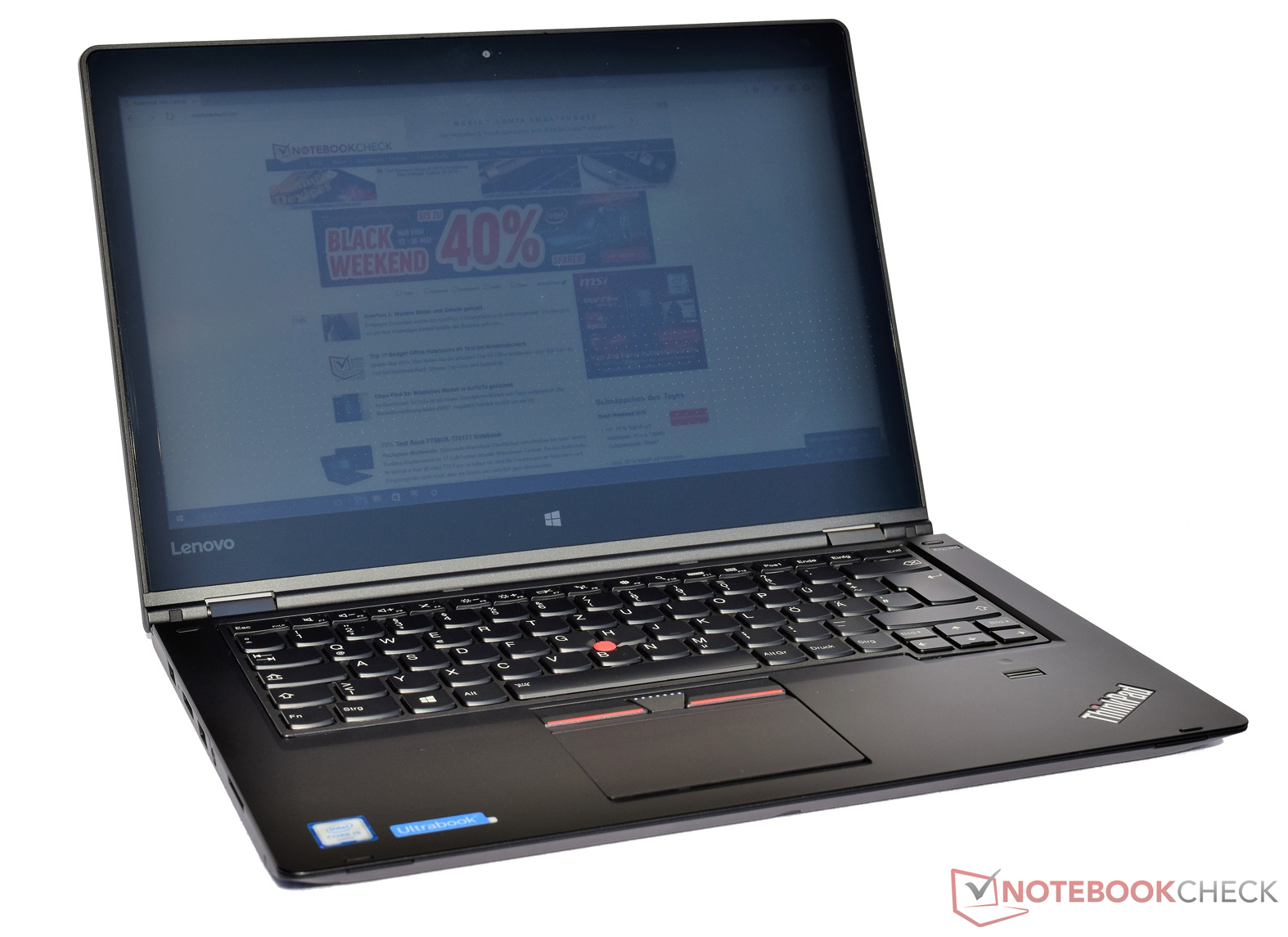
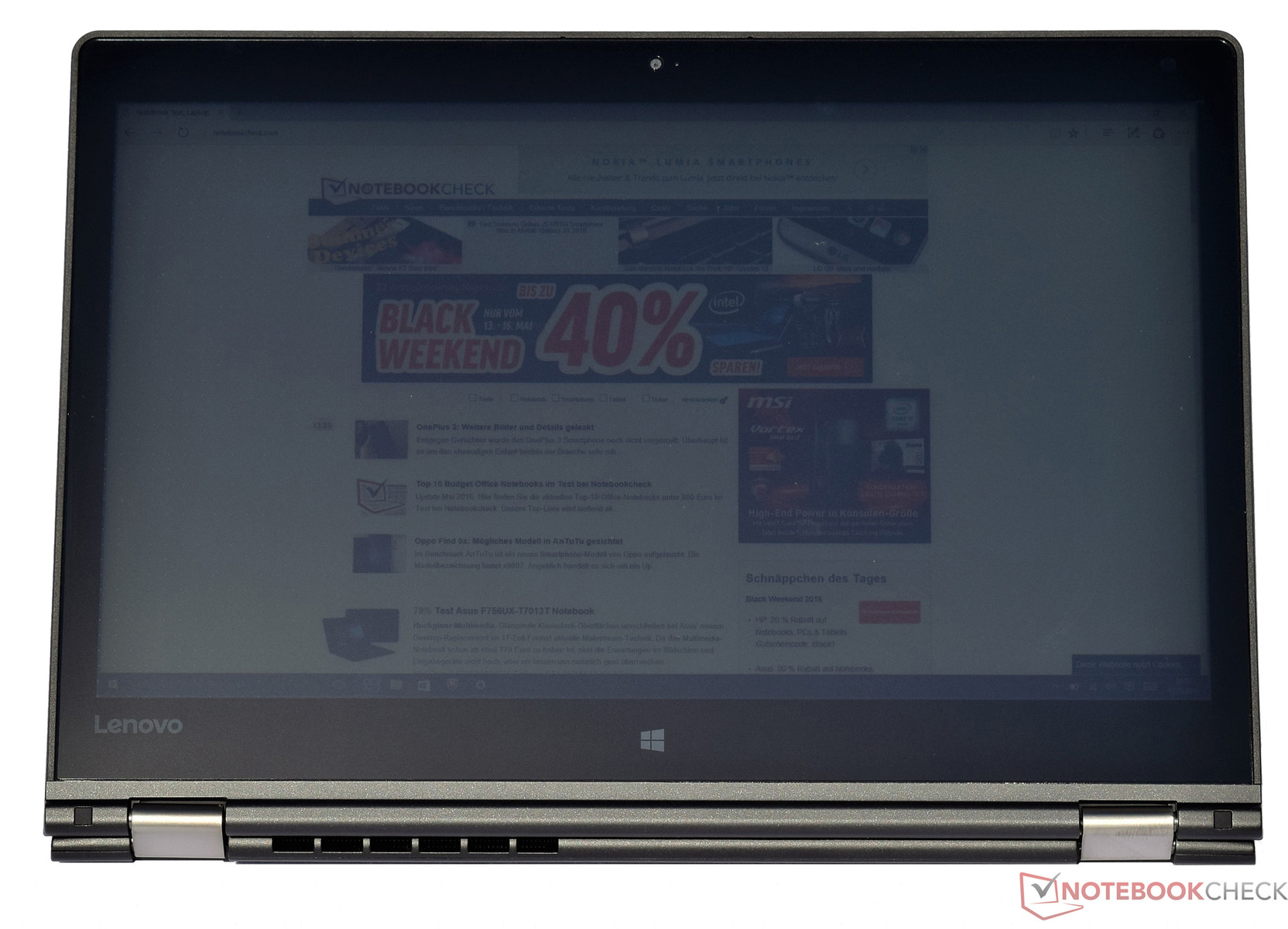
The design of the ThinkPad lineup is unmistakable - one look is enough to see that it is a high-quality ThinkPad product. A silver-colored "ThinkPad" logo adorns the device's display bezel and base unit. The "i" dots in both logos serve as status LEDs and emit subtle red lights. The build of Lenovo's ThinkPad Yoga 460 is very good. Everything fits tight and nothing wobbles or clatters. The square device can be used in four different modes (Laptop, Stand, Tablet and Tent). However, it is not light with a weight of 1.8 kilograms. That leads to the question of who would want to permanently hold the device in their hands. This mode will sooner be used when the device lies flat on a table. Both 360-degree hinges enable this mode. They make a solid and quality impression and keep the display firmly in the desired position. It is not possible to open the lid with only one hand. Minor rocking is evident during touch inputs in Laptop Mode. The system automatically adapts the settings to the selected modes when changing the mode and locks the keyboard accordingly to prevent accidental inputting. Lenovo integrates a clever concept for this: When the screen is tilted by 180 degrees, the keyboard's lift and lock automatic function is enabled, and consequently the keyboard bezel is lifted and the keys are locked. This also reduces the risk of damaging the keyboard on a rougher surface.
At first glance, it looks like Lenovo relies on plastic. However, that is deceptive because the casing is carbon-fiber reinforced. That makes it robust, and it withstands even the roughest conditions in outdoor use. Twisting the base is only possible with a lot of force. The display can be warped by a few millimeters, which then also leads to visible color deviations on the screen. The base barely dented in the pressure test. Wave formations were only visible on the screen when pin point pressure was applied to the display.
We can conclusively say that the casing presents good qualities, and that primarily the keyboard's sophisticated lock mechanism has been implemented well.


Connectivity

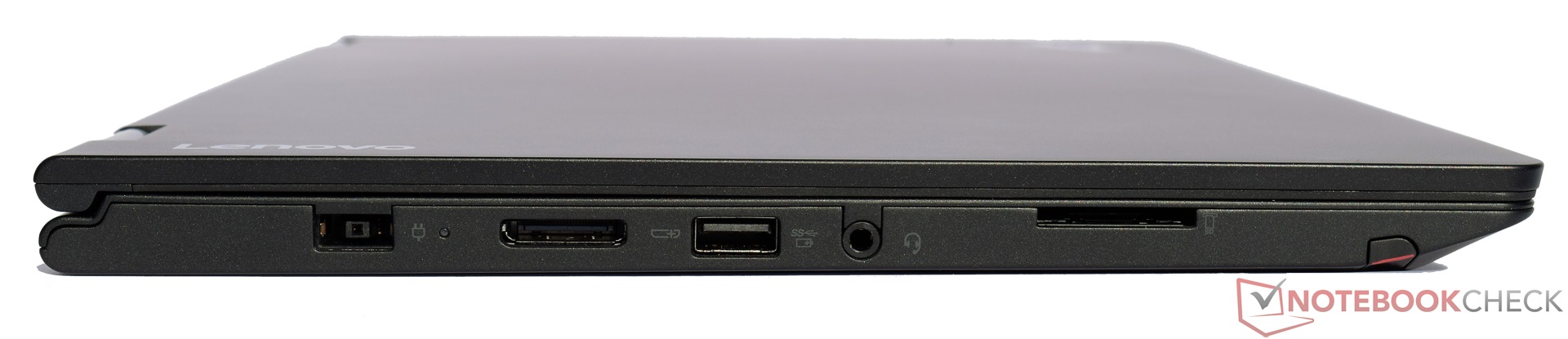
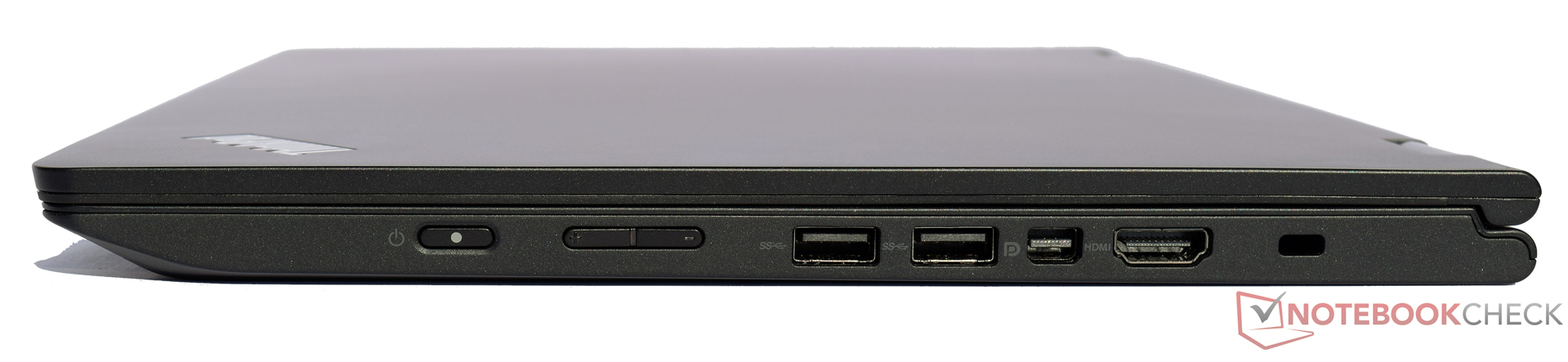
All interfaces are situated on the device's left and right. The distribution is good on the left and there is enough room. It could sometimes get tight on the right, where HDMI, mini-DisplayPort and two USB 3.0 ports are placed right beside each other. Lenovo's ThinkPad 460 sports a total of three USB 3.0 ports. That is average for this device category. A docking station port is not installed on the underside. However, Lenovo treats the Yoga 460 to a OneLink+ port on the left that enables end users to connect Lenovo's ThinkPad OneLink+ Dock docking station via a cable. The number of existing ports can thus be expanded considerably. The memory-card reader supports all common formats (MMC, SD, SDHC, SDXC).
Buyers will not find an optical drive. Lenovo offers users who depend on mobile Internet connections the option of configuring the device with a Huawei ME906S (114 Euros, ~$129) or Sierra Wireless EM7455 by Qualcomm (156 Euros, ~$177).

\


Communication

Intel's Dual Band Wireless-AC 8260 module takes care of wireless communication. The Wi-Fi module's spec sheet reveals that Bluetooth 4.2 is supported. 867 Mbit/s is the maximum theoretical gross transmission rate for this Wi-Fi module in 802.11ac operation (dual-stream). We simulated an ideal scenario with a Linksys EA8500 router in the test and measured a reception rate of 622 Mbit/s and transmission speed of 421 Mbit/s. Lenovo's ThinkPad Yoga 460 places itself above the average with these rates. Cabled Internet connections are possible via the OneLink+ interface with a corresponding adapter.

Security

The security aspect in business devices should not be neglected. Lenovo's ThinkPad Yoga 460 features a fingerprint scanner, Trusted Platform Module (TPM) and Kensington lock slot. Furthermore, it is possible to use the anti-theft software "Computrace" with Lenovo's ThinkPad Yoga 460. This security option is found in the BIOS. It is a software and hardware-based solution by Absolute Software. Lenovo does not optionally offer any more hardware security options for the ThinkPad Yoga 460. Security software in the form of McAfee (Internet Security LifeSafe), Norton (Security Premium/Deluxe) or Absolute LoJack International (Computrace) with various runtimes (up to 4 years depending on the offer) can be added to the order list.

Accessories

Lenovo ships the ThinkPad Yoga 460 with a quick-start guide and a small power supply. It is also possible to expand the ThinkPad via the OneLink+ port. The manufacturer offers the option of expanding the device's interfaces via the OneLink+ docking station. The station is priced at 213 Euros (~$242). A slightly cheaper alternative is the OneLink+ VGA/RJ45 adapter for just below 33 Euros (~$37).

Operating System

Lenovo exclusively sells the ThinkPad Yoga 460 models with Microsoft's Windows 10 64-bit editions. The customer can only choose between a Home and Professional version. The two versions have a price difference of 76 Euros (~$86). We would, however, recommend using Microsoft's Windows 10 Professional in productive environments.

Maintenance

The absent service hatch makes maintaining the device difficult. The installed hardware components can only be accessed by removing the base unit's entire underside. In addition to various screws, some tight-fitted plastic hooks have to be released. We did not want to risk that with our shop device. Replacing the battery is only possible when the device is opened.

Warranty

Lenovo only offers a 12-month warranty on the ThinkPad Yoga 460. It is possible to extend this period up to three years for a one-time payment of 234 Euros (~$265). Additional accidental damage protection can also be covered for the three years and boosts the price to 376 Euros (~$427).

Keyboard

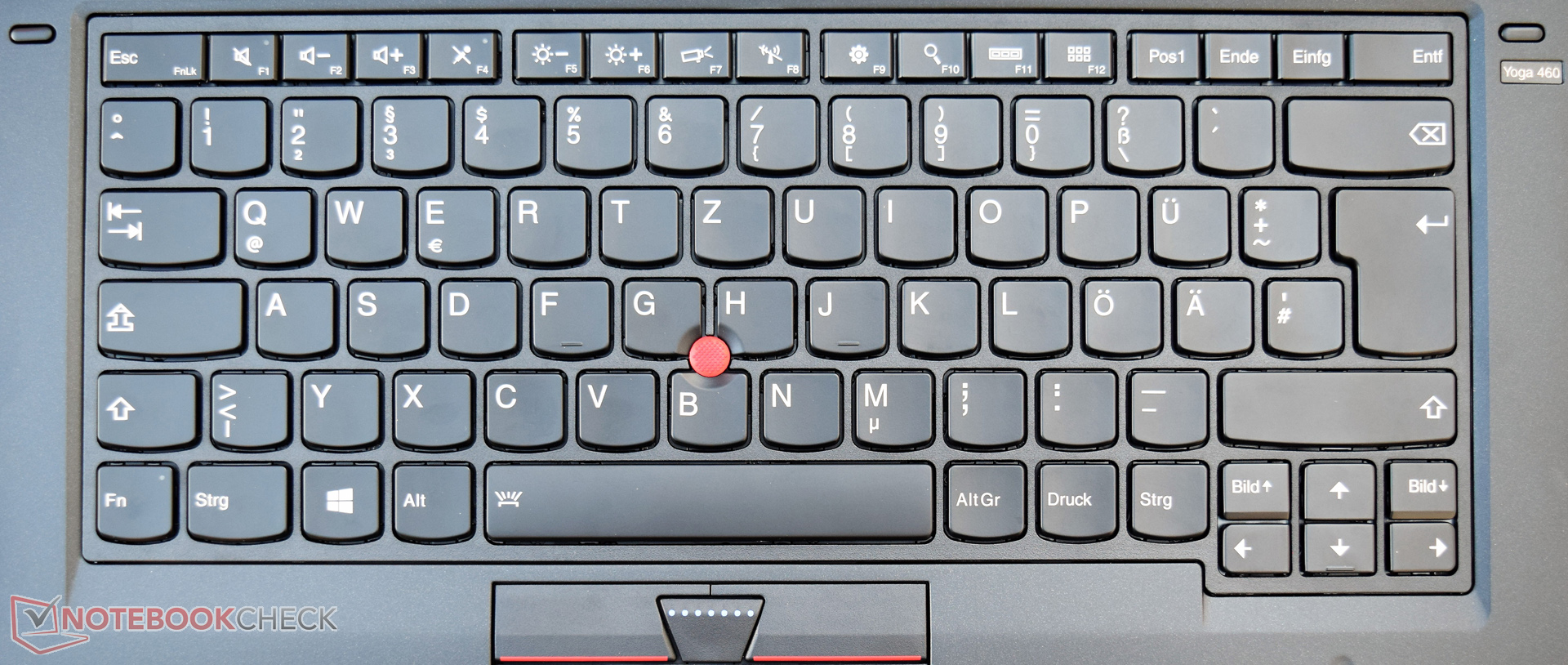
The keyboard in Lenovo's ThinkPad Yoga 460 is perfect for prolonged typing sessions. The sleek chiclet keys are lightly concave and are spaced at approx. 3 millimeters. The pressure point is very palpable despite the short drop, and it provides a good feedback. The lettering of the single keys is good and does not make an overly cramped impression. The subtle backlight supports the user in dark work environments. The single keys are fitted tightly and do not clatter. The keys' stroke noise is agreeably quiet, and it will not distract co-workers. The keyboard bezel lifts when changing to Tablet Mode, and the keys are locked. That prevents accidental inputs, and the keyboard is also protected against damages.


Touchpad/TrackPoint

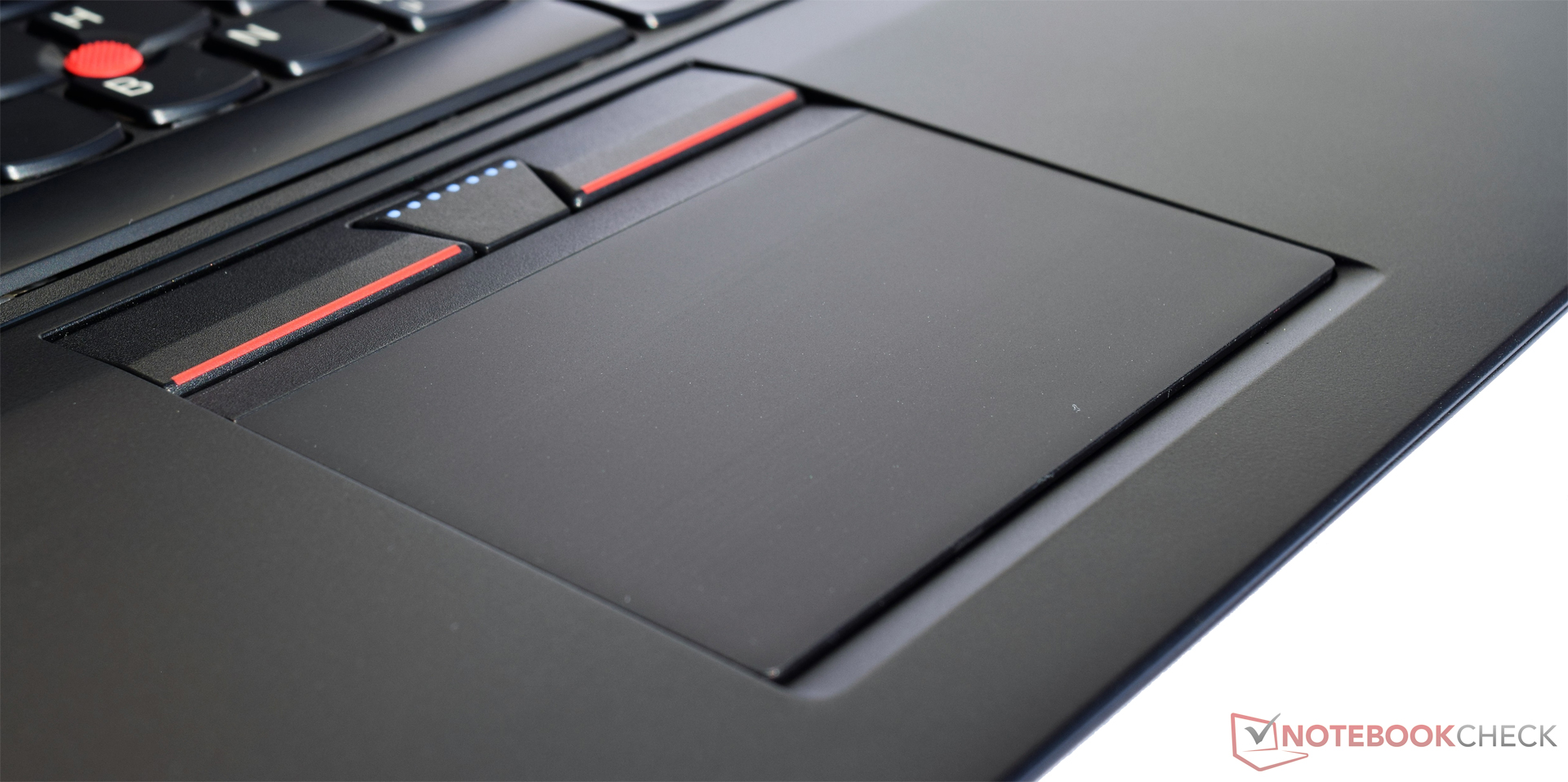
Lenovo installs both a ClickPad and TrackPoint in the ThinkPad Yoga 460. The ClickPad's input surface area is 9 x 5.5 centimeters. Although this area is sufficient, a slightly bigger input surface would have been desirable. Inputting, e.g. multitouch inputs, is smooth and accurate. However, problem zones are found in the corners and along the edges. The ClickPad is a bit sluggish here. Three dedicated keys for using the TrackPoint are incorporated above the ClickPad. It functioned impeccably and the mouse cursor could be moved quickly and accurately over the screen.


Touchscreen

Lenovo's ThinkPad Yoga 460 sports a 10 point multi-touchscreen. Inputs are implemented quickly and instantaneously up into the corners. Lenovo also treats the ThinkPad Yoga 460 to a ThinkPad Pen Pro that enables precise inputs - no visible aberrations were noticed even in the lateral areas. It is an active stylus that detects pressure levels. A touch sensitive Windows logo that is situated in the center below the touchscreen can be used as a Windows key.


Display

Lenovo relies on a 14-inch IPS touchscreen with a native resolution of 1920x1080 pixels for the ThinkPad Yoga 460. That equals a pixel density of 157 PPI. Lenovo describes the surface as matte and anti-glare. That is true to some extent since other touchscreens are considerably more reflective than the one here. However, we would call the surface semi-matte. The panel has an average brightness of 242.2 cd/m². An illumination of 92% is good, but the former Lenovo ThinkPad Yoga 14 achieved slightly better rates. Very visible backlight bleeding is seen at the edges on a completely black image. However, they are not annoying in routine use. Lenovo's ThinkPad Yoga 460 takes third place behind Acer's Aspire R13 R7-372T-746N and HP' Spectre x360 13 with this screen.


The black level of 0.28 cd/m² is comparatively low. Consequently, black sections look deep and dark on the screen. The contrast of 850:1 additionally ensures rich black reproduction. The shifts in colors and grayscale levels are reflected in the DeltaE 2000 rates. Although they are not very high, a rate less than 3 would be desirable. The adapted ICC profile could help here. We achieved much better DeltaE 2000 rates with a calibrated panel. The screen is not suitable for professional use due to the low color space coverage (sRGB: 62.85%; AdobeRGB 39.81%). The manufacturer does not offer an alternative screen for the ThinkPad Yoga 460.

Thanks to the IPS technology, wide viewing angles are no problem. The reference image can be recognized well from every position. Using this device outdoors is possible with minor restrictions. The screen's light, matte finish is good and reduces reflections. The screen brightness of 243 cd/m² is sooner middling and makes use in very bright work environments difficult. Direct sunlight on the screen should be avoided. We would recommend looking for a shaded place. Working without major restrictions would then be possible.

Performance

Lenovo's ThinkPad Yoga 460 is a 14-inch convertible for the business sector. The build is on a very good level and made for longevity. Our review sample houses an Intel Core i5-6200U, 8 GB of RAM and a 256 GB SSD. Thus, it is ideally equipped for demands placed on it in office routine. It even has enough resources for multimedia applications. Our review sample is furnished with the smallest CPU model that Lenovo offers for this lineup. Lenovo has three other processors for the ThinkPad Yoga 460. An Intel Core i5-6300U or Intel Core i7-6500U is installed in the mid-price range for 130 Euros (~$147) more in each case. Lenovo offers the Intel Core i7-6600U as the premium version and demands a surcharge of 300 Euros (~$341) for it. Our review sample is presently sold for 1300 Euros (~$1477).


Processor

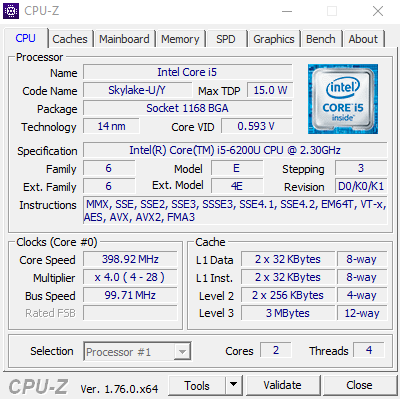
Intel's Core i5-6200U is strong enough for the most common applications. This processor has 2 physical cores that can process 4 threads simultaneously via Hyper-Threading technology. The Skylake CPU has a TDP of just 15 watts, which also reaps in plus point in battery life. The processor has a base clock of 2.3 GHz that can be boosted up to 2.8 GHz (1 core) or 2.7 GHz (2 cores) via Turbo mode. The performance of Intel's Core i5-6200U in our review sample is well-implemented. Comparing the Cinebench R15 rates shows that Lenovo's ThinkPad Yoga 460 is the fastest device based on Intel's Core i5-6200U. It cannot match the performance of an Intel Core i7-6500U. Devices powered by this CPU calculate approximately 10% faster.

System Performance

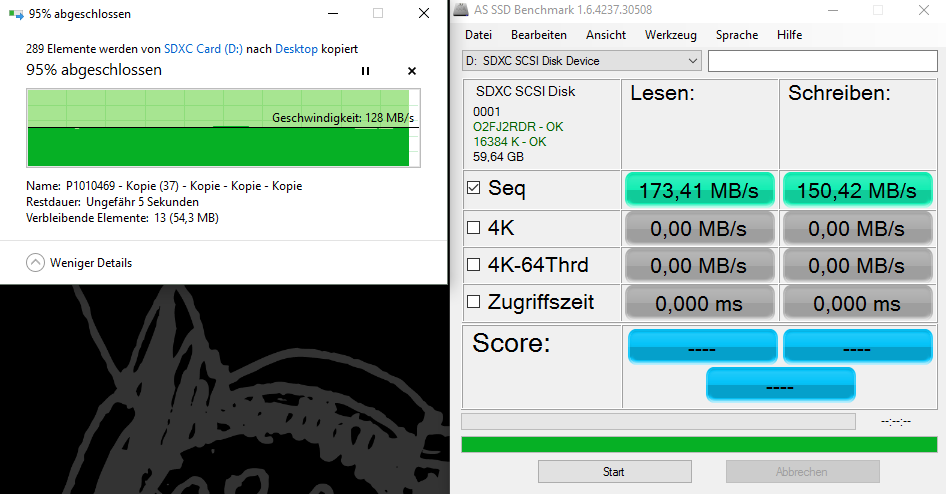
The performance of Lenovo's ThinkPad Yoga 460 is appealing and can cope with the average day at the office. Installing an SSD was definitely the right decision, and the user will notice performance potential of this system storage time and again. Prolonged waiting times or memory blackouts do not evolve. Everything runs smoothly and it is fun to work with the device. The PCMark 8 benchmark scores again underline the more than good implementation of the CPU's performance. The system performance of our review sample is quite able to compete with Lenovo's ThinkPad X1 Yoga based on an Intel Core i7-6500U. Acer's Aspire R14 R5 sets the standards here and can sometimes take a clear lead on Lenovo's ThinkPad Yoga 460. We determined the performance of the SD-card reader using our Toshiba Exceria Pro SDXC 64 GB UHS-II reference card. We copied 250 identical JPG files from the memory card onto the hard drive. The reader's average transfer rate was 131 MB/s thanks to UHS-II support, and consequently clearly above that of most comparison devices.


Storage Device

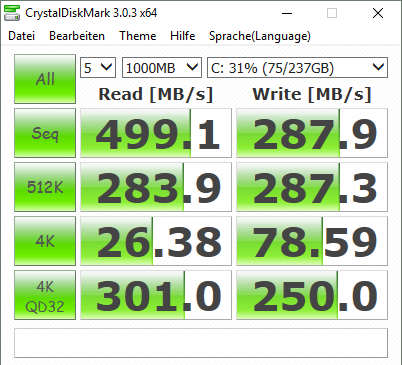
Lenovo installs an SSD with a storage capacity of 256 GB in our review sample. To be precise, it is LiteOn's LCH-256V2S in the 2.5-inch format. The manufacturer's performance specs state up to 520 MB/s in sequential read and up to 290 MB/s in sequential write. We measure the performance using the AS SSD tool and achieve 499 MB/s in sequential read and 287 MB/s in sequential write. A good outcome that almost complies with the manufacturer's data.


Graphics Card

Intel's HD Graphics 520 serves as the graphics unit inside Lenovo's ThinkPad 460. The HD Graphics 520 has to access the system's working memory via the processor's interface for the lack of dedicated memory. Our review sample sports a DDR3 RAM module (1600 MHz). It thus only operates in single-channel mode, which has a negative impact on the performance of Intel's HD Graphics 520. The graphics unit supports DirectX 12 and can also decode videos using the modern H.265/HEVC codec.
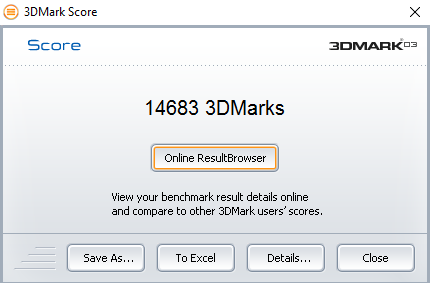
The clock frequencies of Intel's HD Graphics 520 range from 300 - 1000 MHz. They are also dependent on the CPU. The frequencies can reach 300 - 1050 MHz in an Intel Core i7-6500U or Intel Core i7-6600U that Lenovo also offers for its ThinkPad Yoga 460. The 3DMark (2013) scores illustrate that this is a pure business device. Our Lenovo ThinkPad Yoga 460 barely manages to break away from the last place.


Gaming Performance

The gaming performance corresponds with the relatively poor outcome in the 3DMark benchmarks. The performance of Intel's HD Graphics 520 is not enough to render up-to-date games smoothly. Users who want to play an occasional game will have to use games from 2012 and earlier. Devices with a dedicated graphics card should be favored when more graphics power is needed. Here, Lenovo's ThinkPad Yoga 14 can demonstrate the advantages of the GeForce 840M.
Nevertheless, Intel's HD Graphics 520 does a good job. Its performance is definitely enough for its use in a business laptop.

System Noise

Lenovo's ThinkPad Yoga 460 is by far the quietest device in this comparison test. Consequently, there is absolutely no reason for complaint. The small fan is permanently disabled in idle mode. Thanks to the installed SSD, the device operates completely noiselessly. The fan is quickly enabled in load but is very quiet at 32.5 dB(A). The ear would have to be held close to the device to hear the fan spin.

Temperature

Compared with Lenovo's ThinkPad 14, our present review sample heats up a bit more during load. We measured a maximum of 48.8 °C on the underside, which is very palpable in prolonged use. That equals a plus of 1.4 °C over the former model. We achieved a maximum temperature of 39.5 °C on the upper side. The convertible reached just over 30 °C in idle mode. These are all good rates that should not cause disconcertment.
The processor reached a maximum temperature of 81 °C in the Prime95 program. At a clock rate of 2.6-2.7 GHz, the maximum possible performance is permanently available. The frequency only rarely dropped to 2.6 GHz. We measured a maximum temperature of 77 °C on the GPU. Intel's HD Graphics 520 stably clocked at a frequency of 950 MHz.
The low TDP of 15 watts was limiting in our stress test where the Prime95 and Furmark tools both run simultaneously for at least one hour. The GPU and CPU have to share these 15 watts. Thus, the processor clocked at a frequency of 1.5 GHz right from the start. The temperatures were slightly below the ascertained maximum rates. There was no difference between AC and battery modes in the stress test. We reran 3DMark 11 directly after the stress test and recorded a score of 1245 points. That equals approx. 3.5% less than after a cold start. Consequently, significant temperature-related disadvantages will not evolve in the long run.

Speakers

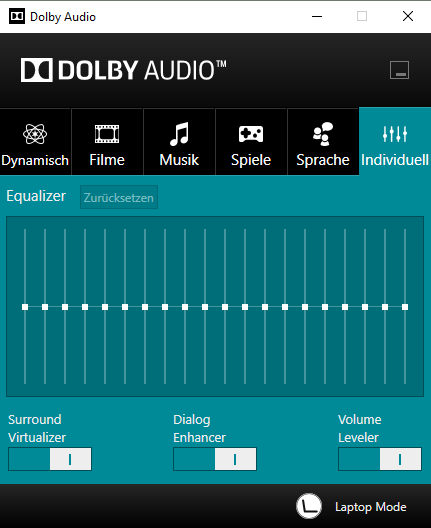
Both stereo speakers are installed in the convertible's underside on the sides. The sound is clear and sufficiently loud. However, low tones are absent. The speakers are well-suitable for video conferencing, as well as for short videos or music pieces. The sound can be customized to meet personal needs via the Dolby Audio software. The included program provides predefined profiles and an equalizer. However, users who do not want to waive first-rate sound enjoyment should connect external audio peripherals. Audio output using the stereo jack functioned impeccably.


Power Consumption

The favorable choice of components ensures a minimum idle consumption of only 3.6 watts. The short-term maximum consumption is 34.2 watts. Those are good rates for the processor's performance yield. On the other hand, a consumption of 0.35 watts measured in a completely shut down state is unfavorable.
A comparison with the other devices illustrates that Lenovo's ThinkPad Yoga 460 is very frugal with energy. All other review samples present a higher average consumption.
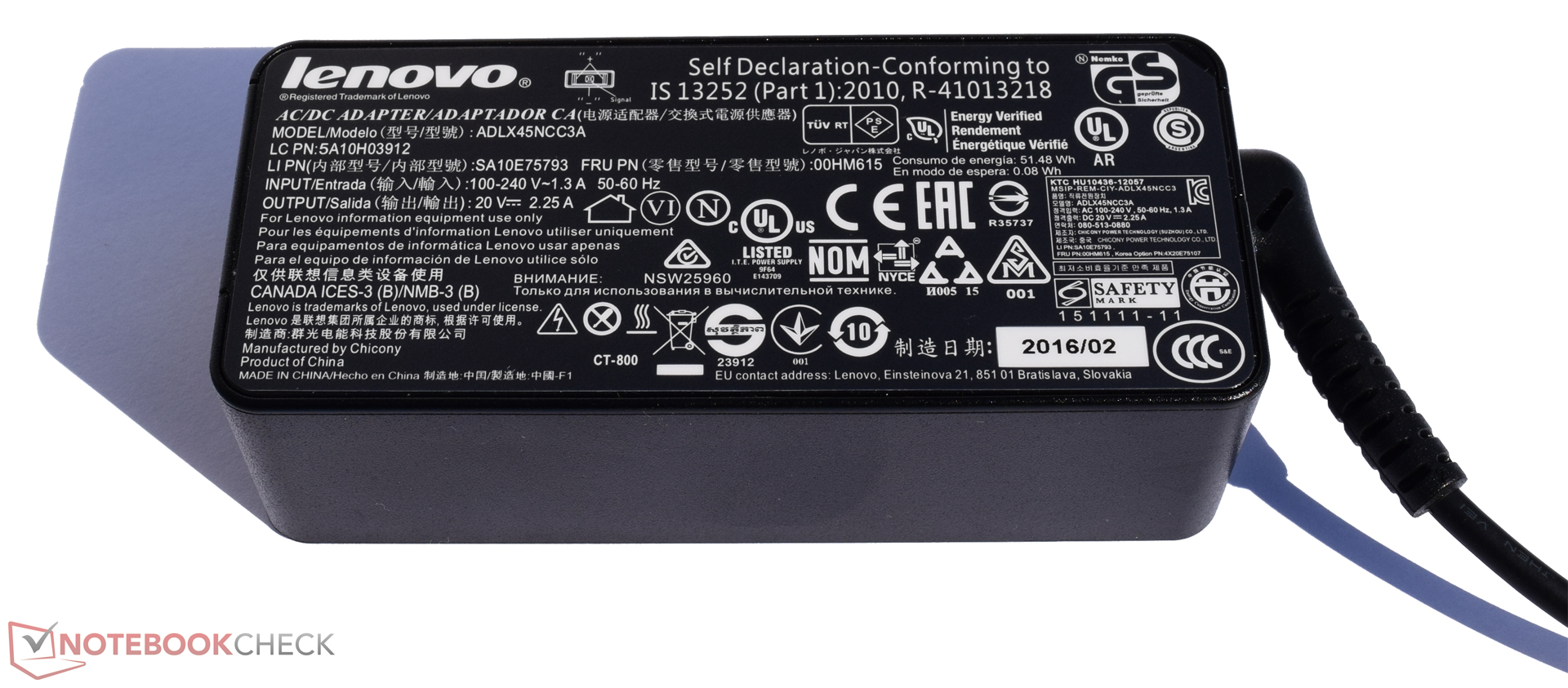
The small 45-watt power supply is sufficiently sized for Lenovo's ThinkPad Yoga 460.


The 3-cell, lithium-polymer battery has a capacity of 53 Wh. That is marginally lower than in Lenovo's ThinkPad Yoga 14 and HP's Spectre x360 13 (both 56 Wh). The low power consumption, however, still leads to decent runtimes. A charged battery is enough for 2:22 hours of full load. Our Wi-Fi test, where different websites are opened every 30 seconds, is more realistic. Here, the "Balanced" profile is enabled and the screen's brightness is set to approximately 150 cd/m², which means reducing the screen brightness by 2 levels. Lenovo's ThinkPad Yoga 460 achieves a good runtime of 7:38 hours here and places itself in second place behind HP's Spectre x360 13 that lasts 42 minutes longer.


Lenovo's ThinkPad Yoga 460 is an enduring 14-inch convertible made for business routine. Thanks to the new Skylake processors, the performance has been increased by about 10% compared with the former lineup based on Broadwell CPUs. However, a business convertible that weighs almost 2 kilograms and is not a bargain at a purchase price of 1300 Euros (~$1477) will have a hard time convincing buyers.
Nevertheless, Lenovo's ThinkPad Yoga 460 has quite a bit to offer. The slim, straightforward casing features a very good build and does not give reason for complaint. The device's good input devices including TrackPoint and stylus (ThinkPad Pen Pro) for the multi-touchscreen also convinced us. The keyboard's clever lock mechanism, for example in Tablet Mode, is good and it also protects against damage. The screen is impressive and viewing-angle stable. The surface's finish reduces reflections indoors and out. On the other hand, the maximum brightness could be much higher for a convertible. The different modes of use that also speak for Lenovo's ThinkPad Yoga 460 might be more decisive for purchasing the convertible. Should this versatility not be needed, then a conventional ultrabook might be the better choice in some cases.